
Frontier disciplines are usually taught indoors, in front of a screen. We deliberately move part of the S.P.A.R.K. cycle outdoors instead — not as a wellness break, but because unstructured, low-stakes observation is where an original research question actually starts, whether it ends up being about ecology, physics, or code.
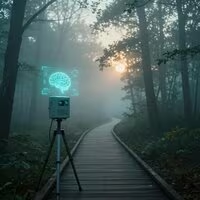
The mechanism is instrumentation, not just fresh air. Sessions at a Curiosity Cottage or Curiosity Corner move outside with the same tablets, environmental sensors, and occasionally drones our Curiosity Coaches use indoors — logging real data on air quality, plant growth, or motion that feeds directly back into a physics or environmental-systems module a student is working through inside a Cottage the following week.
Observation and hypothesis generation underlie every frontier discipline that comes after them. Treating outdoor, instrumented practice as a deliberate stage of S.P.A.R.K. — refined and tested the way we refine every other method — is what separates it from a generic nature-day add-on.